Make Protocol
Make is a set of bilateral, non-custodial agreement patterns for Verus. The protocol and its local reference client, Make GUI, help counterparties prepare, verify, and settle the transactions they explicitly authorize.
verusd, prepares transactions, and follows loans involving identities you control.How a Make loan works
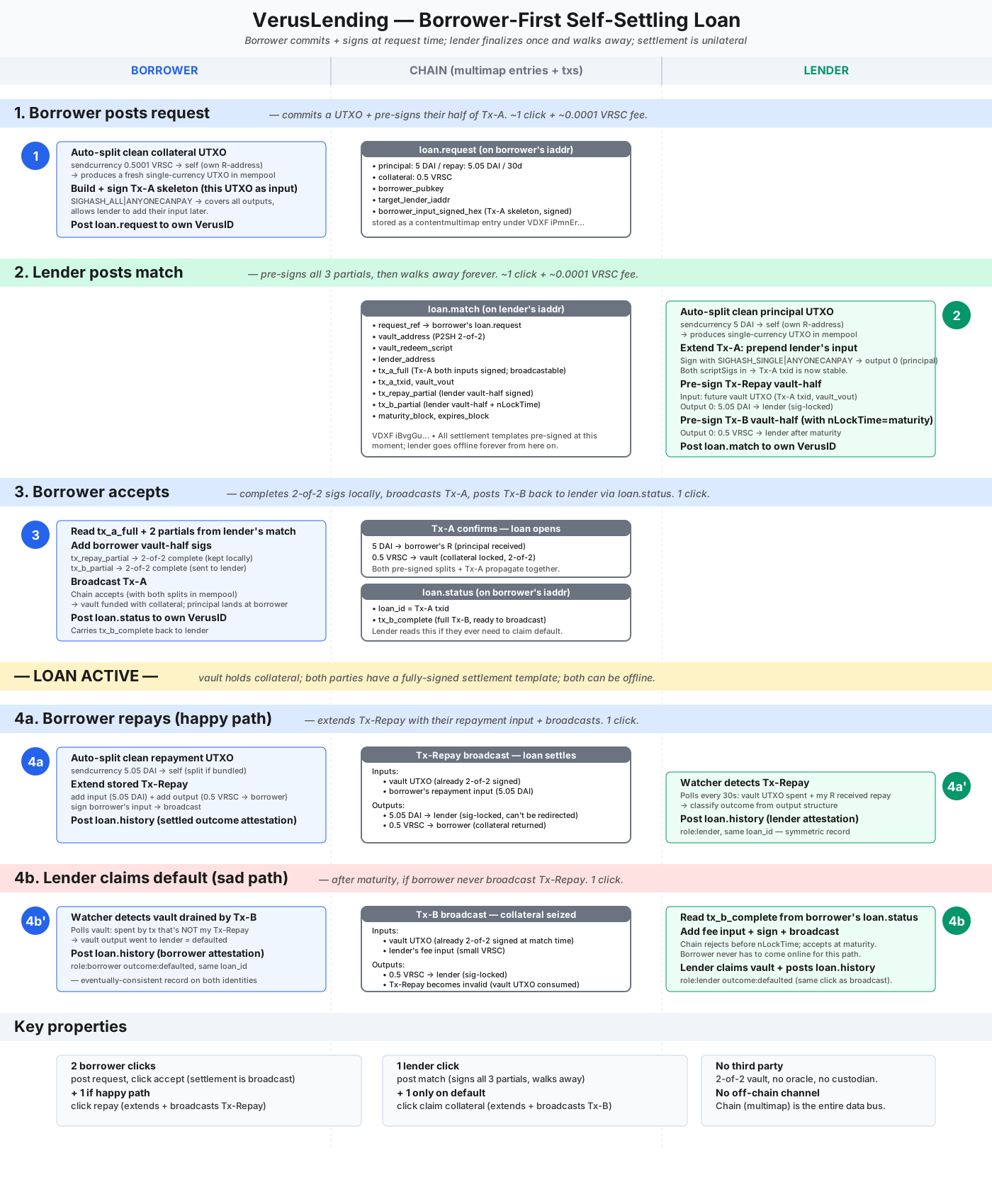
Make uses ordinary Verus transaction primitives: a jointly controlled vault, atomic raw transactions, and pre-signed time-locked settlement transactions. The cooperative step happens once at origination; afterwards neither side needs the other to be online to use the settlement path they already hold.
Set the terms
Borrower and lender agree on collateral, principal, repayment amount, maturity, grace period, and the addresses that receive each outcome.
Fund the vault
Both parties cooperatively create Tx-A: collateral moves into a 2-of-2 vault while principal moves to the borrower.
Prepare settlement
Before opening, the parties prepare constrained transactions for repayment and default. Each signature is limited to the output it authorizes.
Broadcast unilaterally
The borrower can repay during the term. After maturity plus grace, the lender can claim default. Optional rescue logic is a last-resort path.
For VRSC collateral the vault is normally a P2SH 2-of-2 multisig. A VerusID-flavoured vault is available when the chain requires non-VRSC collateral outputs to go to an i-address.
What each party holds
Discovery, history, and reference materials
The cryptographic core does not require a VerusID, but VerusID contentmultimap entries provide the marketplace layer for offers, discovery, and chain-derived history. Make's registered VDXF namespace defines the canonical keys and payload schemas.
The implementation is intentionally replaceable: Make GUI is a convenience client that runs beside your own daemon; the protocol specification and the chain are the source of truth.
Run Make GUI locally
Make GUI is a local web app for browsing and acting on the protocol with your own verusd. It is intended for one user on their own machine, not as a public service.
Paste this in a terminal, then open http://127.0.0.1:7777/. The process stays open while the local GUI is running; use Ctrl+C to stop it.
# Run the local reference client beside your own node
git clone https://github.com/Fried333/make-gui.git
cd make-gui
python3 server.py

# Open http://127.0.0.1:7777/ in your browser